
Written by Right Warehousing® Solutions LLP Team

In the high-stakes world of industrial and commercial construction, the sealant is frequently the most undervalued component. It often represents a tiny fraction of the total project budget, yet its failure—a cracked joint, a migrating stain, or a failed bond—can lead to catastrophic water damage, energy loss, and costly aesthetic remediation.
For decades, Silicone was the undisputed ruler of the construction industry, celebrated for its durability and supreme weather resistance. However, the last fifteen years have seen the meteoric rise of a new challenger: MS Polymer (Modified Silane, often called “Hybrid”).
At Right Warehousing Solutions, where we supply the Nippon Sealant range to major infrastructure projects, the decision matrix for engineers is becoming increasingly complex: When do I stick with the proven Silicone, and when do I switch to the versatile MS Polymer?
The truth is that neither chemistry is universally “better.” Each is a specialized tool. This comprehensive technical guide will dissect the unique properties of both, compare them head-to-head on the most critical performance metrics, and provide a definitive, scenario-based decision matrix for your next industrial project.
Silicone sealants are inorganic polymers. Their strength lies in the stability of their chemical backbone, which consists of Silicon-Oxygen (Si-O) bonds. This is the same incredibly stable bond found in natural quartz and glass, making Silicone highly resilient.
The Si-O bond is largely impervious to the energy emitted by Ultraviolet (UV) radiation—the primary destructive force on any exposed façade in the Indian climate.
Despite its durability, silicone has three major aesthetic and compatibility drawbacks that architects and façade consultants must manage:
MS Polymer (Modified Silane) technology was developed to solve the adhesion and aesthetic shortcomings of silicone and the poor UV stability of traditional Polyurethane (PU). MS Polymers are organic-inorganic hybrids.
MS Polymers are engineered for versatility, making them the preferred choice for modern multi-substrate construction projects.
While MS Polymers are excellent general-purpose industrial sealants, they have not fully displaced silicone in two areas:
To make an informed choice, engineers must consider the chemical properties side-by-side:
| Performance Metric | Neutral Cure Silicone (Nippon VT 218) | MS Polymer (Nippon VT 620/625) | Conclusion |
| UV Resistance | Unbeatable (Inorganic) | Very High | Silicone wins for direct, extreme sunlight exposure. |
| Paintability | Impossible | Excellent (Organic top layer) | MS Polymer wins for aesthetic blending. |
| Staining Risk | High Risk on porous stone/concrete | Zero Risk | MS Polymer wins for luxury finishes. |
| Chemical Odor | Low/Alcohol odor | Very Low/None | MS Polymer is better for sensitive indoor areas. |
| Adhesion to Damp Surfaces | Poor | Good (Wetting properties) | MS Polymer simplifies application in humid weather. |
| Long-Term Elasticity | Excellent | Excellent | Both maintain high movement capability (+/- 25% to 50%). |
| Corrosion | Neutral Cure is safe on metal | Neutral Cure is safe on metal | Both are safe for PEB/metal structures (unlike Acidic Silicone). |
At Right Warehousing Solutions, we simplify this complex decision into a few key questions based on the application:
The performance of any sealant, regardless of chemistry, is entirely dependent on proper joint design and preparation. The two most common causes of failure are preventable.
A sealant joint is designed to act like a rubber band, stretching and compressing with the joint’s movement. For this to work, the sealant must only adhere to the two parallel sides of the joint (the substrate walls).
Even MS Polymer’s excellent adhesion has limits. Oils, dust, and release agents from concrete forms must be removed.
In industrial construction, true Value Engineering means selecting materials that minimize long-term maintenance costs and preserve the value of the primary asset.
Choosing the right sealant is no longer a simple procurement decision—it is a critical engineering judgment based on the five scenarios above. By leveraging the specific strengths of the Nippon Silicone (for UV and glass) and Nippon MS Polymer (for paintability and non-staining), you eliminate preventable failures.
At Right Warehousing Solutions, our technical specialists are trained in joint design and chemical compatibility. Don’t compromise your construction with guesswork.
Contact us today for technical data sheets and site-specific recommendations. Let us help you lock in the integrity of your building envelope for decades.
Q: Can I use silicone and MS Polymer on the same project?
A: Absolutely. This is the optimal approach. Use MS Polymer for all concrete and paintable applications, and use silicone only for glazing. They should not, however, be applied directly over one another.
Q: What is a “Low Modulus” sealant, and why is Nippon VT 620 Low Modulus?
A: “Modulus” refers to the sealant’s stiffness (how much force it takes to stretch it). Low Modulus (LM) sealants are very soft and flexible. They are mandatory for long joints in massive pre-cast panels or concrete floors (expansion joints) that experience high movement. High Modulus sealants are stiff and are used more for bonding.
Q: If I use MS Polymer, do I still need a primer?
A: For most common substrates like aluminum, PVC, and non-porous concrete, no primer is required for MS Polymer. For specific high-movement or difficult substrates, always consult the Nippon technical datasheet.
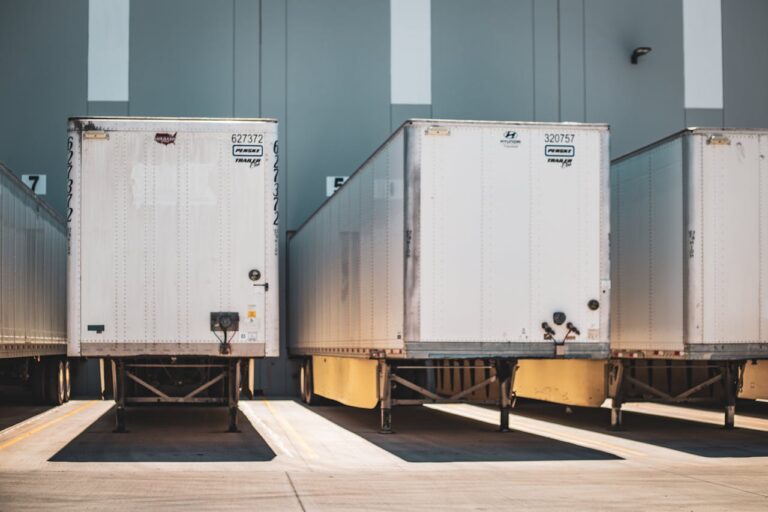
In the anatomy of a supply chain, the warehouse is the body, but the Loading Bay is the heart. It is the only…
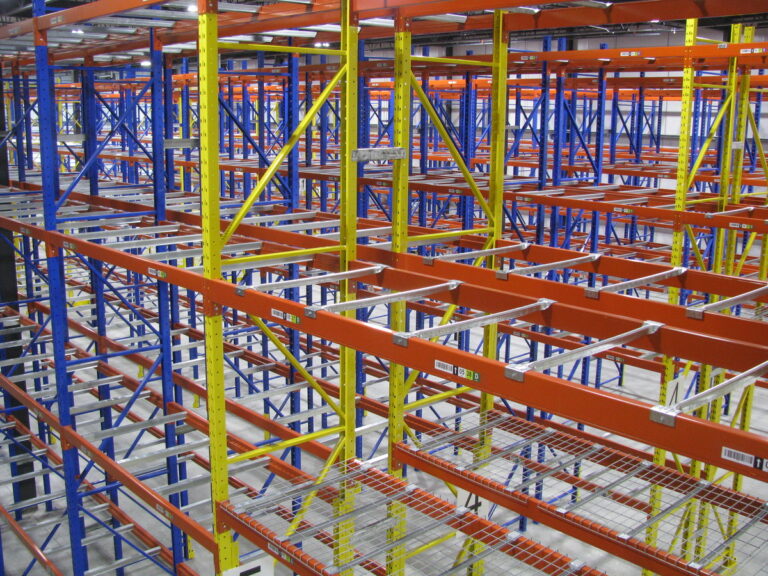
A modern warehouse is a marvel of efficiency, but it is also a high-stakes environment where heavy machinery and static infras…

If you manage an industrial facility, a warehouse, or a commercial complex, the standing seam metal roof above your head is li…
There are no results matching your search

Right Warehousing® Solutions LLP [RWH] is a boutique warehouse solutions company specializes in project design and construction management, Trading Metal Coils and Sheets, Metal Roofs and Accessories, Storage & Handling Equipment.
© 2024 Right Warehousing Solutions. All rights reserved.