
Written by Right Warehousing® Solutions LLP Team
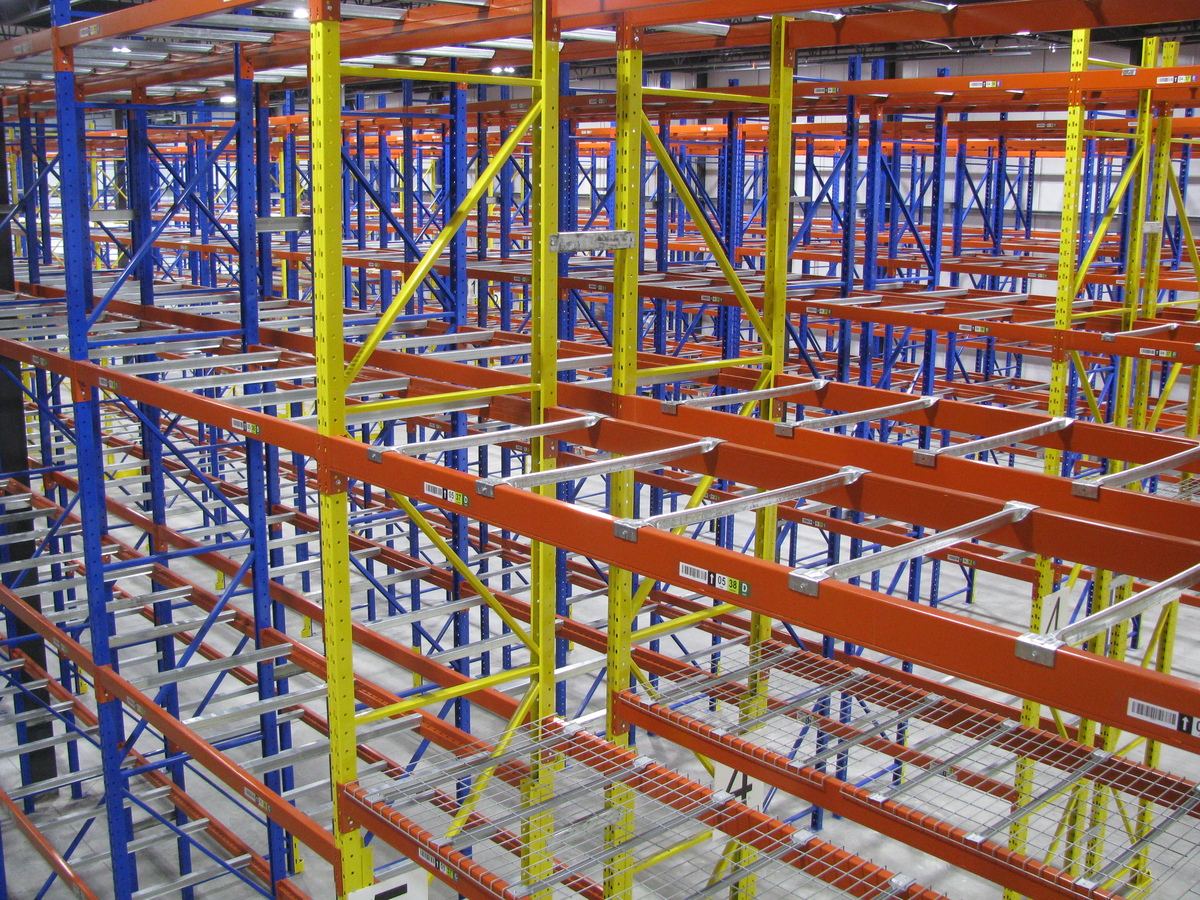
A modern warehouse is a marvel of efficiency, but it is also a high-stakes environment where heavy machinery and static infrastructure operate in dangerously close proximity. At any given moment, a 4-ton forklift carrying a 1-ton pallet is navigating narrow aisles, often at speed.
In this dynamic environment, impacts are not a theoretical risk; they are a statistical certainty.
When a forklift accident occurs—typically a fork tine striking a rack upright or a counterweight clipping a door frame—the immediate reaction is to assess the visible damage. “It’s just a dent,” or “We can replace that upright for a few thousand rupees.”
However, this mindset is dangerous. It ignores the Iceberg Effect.
The visible damage to the metal is often less than 10% of the total cost of the accident. The remaining 90% lies beneath the surface in operational downtime, structural floor damage, machinery wear, and potential liability.
At Right Warehousing Solutions, we specialize in Warehouse Safety. In this deep dive, we will expose the true cost of these “minor” accidents and explain why the industry is rapidly shifting from rigid steel barriers to flexible MPM Polymer Protections.
To understand the cost, we must first respect the physics. Pallet racking systems are engineered to support massive vertical loads, but they are surprisingly fragile against lateral (side) impact.
A standard racking upright is designed to hold thousands of kilograms of inventory. However, its structural integrity relies on its geometry. Even a small dent of 3-5mm in the bottom portion of the upright (the impact zone) can reduce its load-bearing capacity by up to 40%.
If a forklift nudges that compromised upright again, or if the load on the rack shifts, the column can buckle.
Racking systems are interconnected. If one upright collapses, it pulls the beams and adjacent uprights with it. This triggers a progressive collapse—a domino effect that can bring down an entire aisle of inventory in seconds. The cost of such an event is not measured in repairs; it is measured in business survival.
When a facility manager asks, “Why should I spend money on rack guards?”, we ask them to calculate the cost of not having them. Let’s break down the Indirect Costs that most budgets fail to account for.
This is the most overlooked cost in warehousing. Traditional protection involves bolting a rigid steel barrier into the concrete floor.
If a rack upright is damaged, safety protocols dictate that the rack must be offloaded immediately.
Steel is unforgiving. If a forklift hits a steel bollard or guardrail, the barrier might survive, but the forklift won’t. Cracked chassis, damaged forks, and misaligned wheels are common outcomes. The repair bill for a specialized Reach Truck can easily exceed the cost of the barrier that damaged it.
In Food & Beverage or Pharmaceutical warehouses, hygiene is paramount. Steel barriers rust. Paint flakes off when hit. A rusted barrier or paint chips on the floor can lead to a failed hygiene audit, putting your compliance certifications at risk.
For decades, the only solution was to install “stronger” steel. But fighting a 5-ton forklift with a steel pipe is a losing battle. The modern solution is to stop fighting the energy and start absorbing it.
Right Warehousing Solutions is the authorized distributor for MPM (Materiali Protettivi Milano), the world leader in flexible techno-polymer protections.
MPM barriers are not made of metal. They are extruded from a proprietary techno-polymer blend designed with a specific molecular memory.
Where should you invest your protection budget? Here are the 4 critical “Kill Zones” in every warehouse and the specific MPM solution for each.
This is the #1 impact zone. As forklifts turn into an aisle, the rear counterweight swings out and clips the upright.
Inside the aisle, the uprights are vulnerable during pallet placement.
Mixing pedestrians and forklifts is a recipe for tragedy. Painting lines on the floor is not safety; it is just decoration.
The door tracks of your roller shutters or sectional doors are constantly hit by reversing trucks and forklifts entering the building.
Let’s look at the math over a 5-year period for a single protection barrier.
Option A: Mild Steel Barrier
Option B: MPM Polymer Barrier
The Verdict: While polymer costs slightly more upfront, it pays for itself after the very first impact. It is a CAPEX investment that eliminates OPEX (maintenance) costs.
Investing in racking protection is not just about ticking a box for the safety inspector. It is about business continuity. A racking collapse can shut down your operations for weeks, destroy your inventory, and ruin your reputation with clients.
At Right Warehousing Solutions, we don’t just sell yellow plastic. We conduct comprehensive Safety Audits. We analyze your traffic flow, identify your high-risk collision points, and engineer a protection system that keeps your facility running at peak efficiency.
Stop painting rusted steel. Upgrade to the future of safety.
Contact our safety team today to schedule a site audit and see a live demonstration of MPM Reflex Technology.
Q: Are polymer barriers really strong enough to stop a forklift? A: Yes. MPM barriers are rated and tested to specific impact energies (Joules). For example, a standard Rack End barrier can withstand an impact of over 2,500 Joules, which is equivalent to a forklift moving at operational speeds. We can provide certified crash test data for every product.
Q: Can I install MPM barriers myself? A: Absolutely. MPM systems are modular and use a simplified fixing system. They come with all necessary hardware and instructions. However, Right Warehousing Solutions also offers professional installation services to ensure optimal anchoring.
Q: How do these barriers handle cold storage? A: Steel becomes brittle in cold stores. MPM polymers are engineered to maintain flexibility and performance even in sub-zero temperatures (down to -30°C), making them ideal for Cold Chain logistics.
Q: Will these fit my specific racking brand (Godrej, Kirby, etc.)? A: Yes. The Rack Upright Protectors are designed with a universal fit to accommodate almost any brand of racking column width.
In the anatomy of a supply chain, the warehouse is the body, but the Loading Bay is the heart. It is the only…

In the high-stakes world of industrial and commercial construction, the sealant is frequently the most undervalued component….

If you manage an industrial facility, a warehouse, or a commercial complex, the standing seam metal roof above your head is li…
There are no results matching your search

Right Warehousing® Solutions LLP [RWH] is a boutique warehouse solutions company specializes in project design and construction management, Trading Metal Coils and Sheets, Metal Roofs and Accessories, Storage & Handling Equipment.
© 2024 Right Warehousing Solutions. All rights reserved.