
Written by Right Warehousing® Solutions LLP Team
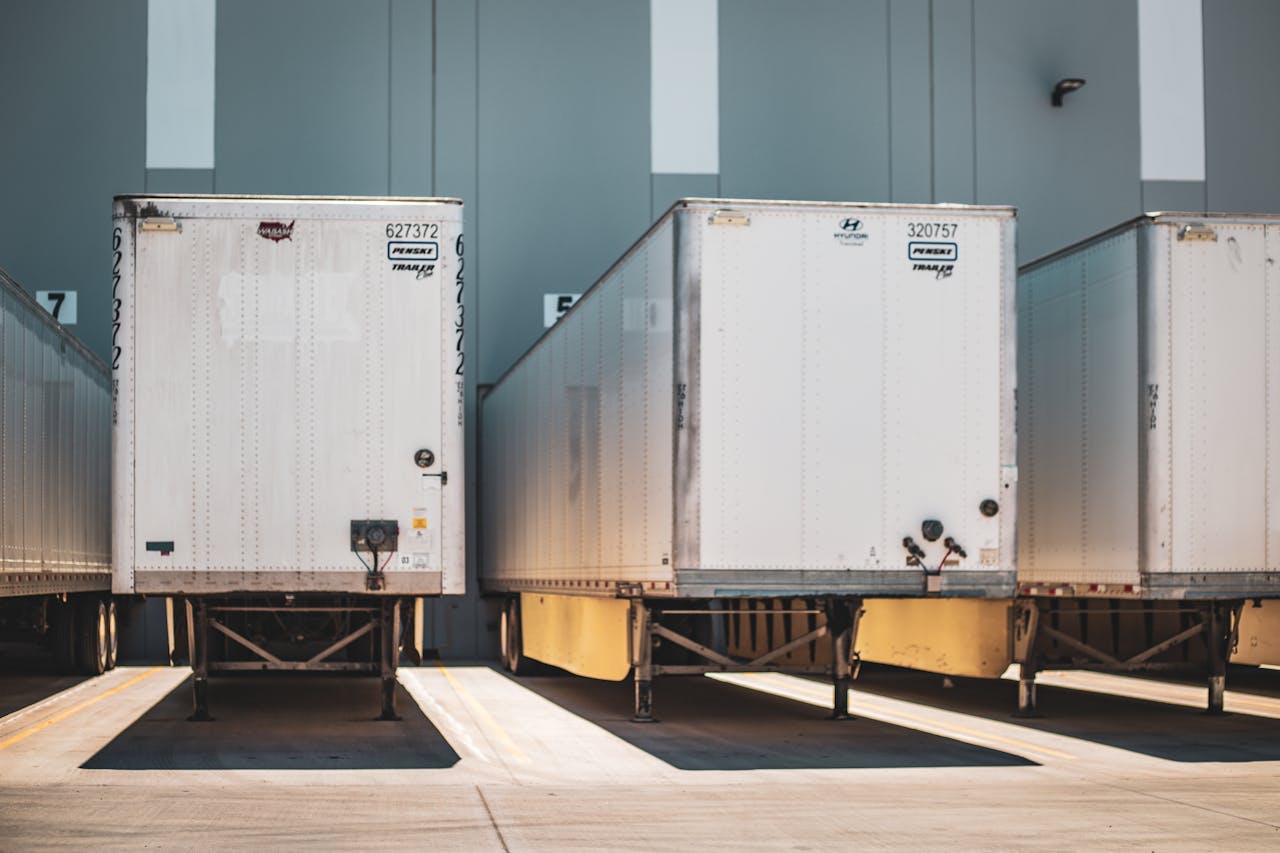
In the anatomy of a supply chain, the warehouse is the body, but the Loading Bay is the heart. It is the only point in your entire facility where product enters and leaves your custody. It is the critical valve that controls the flow of revenue.
If your loading bay is healthy (efficient), your supply chain thrives. Goods move in and out seamlessly, trucks turn around quickly, and inventory velocity remains high.
However, if your loading bay is “clogged”—plagued by slow manual processes, broken equipment, or safety hazards—it creates a cascading failure. A 15-minute delay at the dock door doesn’t just annoy a driver; it delays the truck’s departure, misses the delivery slot at the destination, incurs detention charges, and ultimately disappoints your customer.
Despite its critical importance, the loading bay is often the most neglected area in Indian warehousing. Many facilities still rely on manual loading methods, simple steel plates, and dark, unsafe environments.
At Right Warehousing Solutions, we believe that modernizing your loading bay is the single highest-ROI investment you can make in your facility. In this comprehensive guide, we will explore 5 essential upgrades that transform a static dock into a high-performance logistics machine.
Before we look at the solutions, we must diagnose the problem. Why do traditional, manual loading bays fail?
To solve these issues, we implement the following 5 upgrades.
The fundamental challenge of a loading dock is geometry. Trucks come in different heights. A container truck might be 1.6 meters high; a smaller LCV might be 0.9 meters. Your warehouse floor is fixed at 1.2 meters.
Using manual steel plates to bridge this variable gap is unsafe and inefficient. The solution is the Hydraulic Dock Leveler.
A dock leveler is a permanent fixture built into the concrete floor of the dock.
In industries like Pharmaceuticals, Food & Beverage, and Electronics, maintaining a clean, controlled environment is non-negotiable. However, when a truck backs up to a dock door, there is inevitably a gap around the perimeter of the truck body.
This gap is an open invitation for:
A Dock Shelter creates a seal between the building and the truck.
Studies show that a single unsealed dock door can cost thousands of dollars per year in wasted energy. By installing a shelter, you reduce air exchange, lower your HVAC load, and ensure GMP/HACCP compliance.
One of the most terrifying and fatal accidents in a warehouse is unintended truck departure. This happens in two ways:
Wheel chocks are unreliable (drivers forget them, or they slip on wet pavement). The modern solution is an automatic Vehicle Restraint.
This device is mounted to the dock wall below the leveler. When the truck backs in, a heavy-duty steel hook rotates up and captures the truck’s Rear Impact Guard (ICC Bar), physically locking the vehicle to the building.
The outer door of your loading bay is the barrier against the outside world. Traditional rolling steel shutters are heavy, noisy, and notoriously slow. Waiting for a slow shutter to crank up dozens of times a day kills productivity and leaves your facility exposed.
High-speed doors are engineered from durable, reinforced fabric (PVC/Vinyl) and driven by high-performance motors.
You cannot be safe if you cannot see. The interior of a 40ft container is a “black hole”—dark, unlit, and full of hazards. Forklift operators entering a dark truck are essentially driving blind, increasing the risk of crushing cargo or hitting pedestrians.
Standard overhead warehouse lights do not penetrate the truck. You need Articulated Dock Lights.
Verbal shouting between a driver in a noisy cab and a loader on a noisy dock is a recipe for disaster. You need a visual communication system.
The true power of these upgrades lies in Integration.
At Right Warehousing Solutions, we design “Interlocked” Loading Bays.
This sequence removes human error from the equation. Safety becomes a hard-coded process, not just a guideline.
In the logistics industry, throughput is the primary KPI. By upgrading from a manual bay to a fully automated hydraulic dock system, you can reduce the turnaround time (TAT) per truck by 20 to 30 minutes. Across a fleet of 50 trucks a day, that is 25 hours of gained productivity every single day.
However, the safety ROI is even higher. A single forklift falling off a dock can cost millions in liability, damaged equipment, and tragedy.
Right Warehousing Solutions provides end-to-end loading bay services, from civil pit design to installation and Annual Maintenance Contracts (AMC). Whether you are building a new distribution center or retrofitting an old godown, we have the technology to optimize your throughput.
Is your loading bay a bottleneck or a booster?
Contact our engineering team today for a site audit. Let’s design a dock that works as hard as you do.
Q: Can I install a hydraulic leveler in an existing warehouse? A: Yes. This is called a “Retrofit.” We will need to cut a pit into your existing concrete floor to house the leveler mechanism. We handle the civil design guidance to ensure it is done correctly.
Q: What is the difference between a Dock Leveler and a Dock Lift? A: A Dock Leveler bridges a small height difference (e.g., +/- 300mm) between the dock and truck. A Dock Lift (Scissor Lift) brings a forklift from ground level (0 meters) up to dock height (1.2 meters). Levelers are for loading bays; lifts are for areas without a raised dock.
Q: Do dock shelters fit all truck sizes? A: Most retractable shelters are designed to handle a wide range of truck sizes, from LCVs to 40ft containers. However, if you have a very mixed fleet, we can recommend specific “cushion” or “inflatable” models that offer greater versatility.
Q: How much power does a dock leveler use? A: Very little. The hydraulic pump runs only for the few seconds it takes to raise the deck. Once positioned, it relies on gravity and hydraulics to float. It is extremely energy efficient.
A modern warehouse is a marvel of efficiency, but it is also a high-stakes environment where heavy machinery and static infras…

In the high-stakes world of industrial and commercial construction, the sealant is frequently the most undervalued component….

If you manage an industrial facility, a warehouse, or a commercial complex, the standing seam metal roof above your head is li…
There are no results matching your search

Right Warehousing® Solutions LLP [RWH] is a boutique warehouse solutions company specializes in project design and construction management, Trading Metal Coils and Sheets, Metal Roofs and Accessories, Storage & Handling Equipment.
© 2024 Right Warehousing Solutions. All rights reserved.